
 86 158 01078718
 86 551 65628861
Views: 0 Author: Site Editor Publish Time: 2026-05-28 Origin: Site


Modern automotive parts require materials that combine both lightweight and strength characteristics. They need components that address accurate performance requirements without the need to interfere with quality. This is where custom carbon fiber parts come in.
Custom carbon fiber parts are strong, light, resistant to corrosion, vibration, and heat. This enables them to be deployed in real time, which gives them efficiency and reliability. In this article, we’ll consider the basics of research, design, and planning of custom carbon fiber parts.
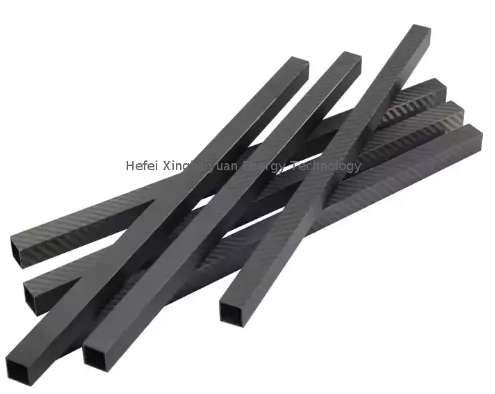
Before carbon fiber parts are designed and manufactured, a comprehensive market research is conducted. This way, your custom carbon fiber parts meet real-world demands, delivering excellence and efficiency.
Here are the steps of automotive research:
Identifying industry needs: First, manufacturers must identify automotive industry needs. They need to strike the right balance between performance requirements that comprise speed, aerodynamics, and durability. They should also strike a balance between cost considerations, keeping in mind the cost of materials, labor, and other tools. Scalability and compliance are the key themes that modern manufacturers need to focus on.
Target vehicle segments: The various segments focus on demand for the custom carbon fiber parts. In high-performance and racing cars, the focus is much on the reduction of weight and strength to the maximum. In the case of electric vehicles, particular focus is given to the better battery life that is achieved through lightweight structures. In the case of luxury cars, the focus is made on high quality finishes and unique designs.
Competitive and material analysis: Another crucial part of research is analyzing competitors. When you do so, you identify current carbon fiber applications in similar vehicles. It also assists you in determining pricing points and innovation opportunities.
Digital 3D modeling of custom carbon fiber parts precedes the physical molding of the parts. This would make sure that all components of the material are tested, and real physical manufacturing does not start. When a mold is not well designed, parts will malfunction when subjected to mechanical load or will not be easily removed from the tooling.
Here are the following phases for design considerations:
Each component should be of a certain standard, such as the load-bearing capacity, effects of impact, and air efficiency. The strength-to-weight ratio is the most desired at this stage.
In this case, engineers make decisions regarding the type of weave, preimpregnated materials, and resins. Careful selection will guarantee optimum power, minimum weight, and elevated environment tolerance. Let’s give a breakdown:
Weave patterns: The weave pattern is the visual texture and the structural attribute that is formed by the woven fibers. Whereas simple designs can provide tight and uniform grids that work well on a flat surface, some other designs, such as the Twill weaves, offer a diagonal appearance.
Wet lay-up vs. prepreg: In wet lay-up, the fiber is cut and placed in the mold, and resin is applied either by a brush, roller, or spray gun. This method requires skill to create high-quality parts. However, it has the lowest requirements to adhere to when making carbon fiber parts.
High-end automotive industries rely on prepreg carbon fiber, where the resin is infused in the fiber ahead. This is because the resin-to-fiber ratio is in perfect control in a factory setting.
Resin systems: Selecting the right material to combine with carbon fiber is vital. Epoxy resin improves strength and durability. Fiberglass layers improve impact resistance and reduce cost, while thermoplastic resins allow for easier shaping or recycling. High-heat applications require resins with a high glass transition temperature to withstand the heat. Exterior car parts, on the other hand, require resins that are designed with UV protection to prevent yellowing.
3D CAD modeling: After making a rough sketch of how the part should be, modern engineers use advanced Computer-Aided Design (CAD) software, such as SolidWorks or AutoCAD, to map out the exact dimensions of the part.
This phase determines the wall thickness, geometric constraints, and structural load paths to optimize weight reduction while keeping the quality in check. By mapping out the exact dimensions, they can foresee any potential problems and fix them before actual manufacturing begins.
Finite Element Analysis (FEA): In this phase, the engineering team runs the FEA software to simulate stress testing, thermal expansion, and impact resistance. This simulation helps to detect weak points and prevent costly errors in the physical production process.
Once the design has been finalized, the next step is to transform the design into the first vision of what is to be produced.
This is where engineers and designers apply what they have learnt in the market research and analysis and translate it into design concepts that they can operate on.
The initial process involves drawing layouts, defining the geometry and size of the car part, together with the purpose it is supposed to serve in the vehicle system. It is these preliminary sketches that are translated into computer models. These enable the engineers and the designers to see the appearance of the part in a 3D setting.
Concept development is also useful to engineers in establishing material specifications, loads, and points of integration with other parts of the vehicle. During this phase, it is important that the engineers take into consideration how the carbon fiber part will react with other parts to guarantee safety, compatibility, and optimal functioning. At the end, the concept will become a fully defined prototype ready for further analysis.
In this stage, the 3D designs are turned into physical samples that can be analysed and refined. The good thing is, rapid prototyping is fast and highly optimized, just as the name implies. Let’s discuss some of these techniques:
Polymeric tooling: Replacing metal tools with plastic parts printed in-house shortens production time while expanding design flexibility. Engineers usually work with polymer resin 3D printed parts for manufacturing certain car parts. Others use short-run printed molds and dies to deliver low-volume batches.
In-house desktop 3D printing: Desktop resin printers are professional, cost-effective, simple to establish, and fast to satisfy demand. Large-format 3D printers can also be purchased in large tools and molds.
Stereolithography (SLA) 3D printing: SLA printing technology produces car parts that have a smooth surface finish. It also enables the production of complicated geometries with great accuracy.
Hand lay-up: This method is applied in low-volume prototyping. In this case, the carbon fiber fabric layers are inserted in a mold and are impregnated with a resin. The method is flexible and therefore serves to allow engineers to experiment with the fiber orientations in order to come up with what is desirable.
CNC machining: The CNC-machined molds have high levels of dimensional accuracy and high-quality surfaces; therefore, they can be used with complex geometries.
This stage ensures the prototype meets all requirements before actual production begins. It helps to prevent failures that could lead to damage. Here are the different types of testing conducted:
Mechanical testing: This is done to analyze key properties such as tensile strength, compressive resistance, and fatigue behavior. This testing analyzes issues that the part will encounter in the real-world, ensuring that the part has structural integrity.
Environmental testing: Most of the time, automotive parts are subject to high temperatures, various humidity levels, and adverse environmental conditions. The parts made of carbon fiber are supposed to be tested to make sure that they are well balanced at such conditions.
Fitment trials and on-vehicle testing: Engineers determine the level of fitment of the part to the vehicle, including checking its alignment and general functionality. In case of any problem observed, this is resolved at an early stage by refining the design. This way, the final product has reliability and durability.
Manufacturing planning is considered to ensure that the carbon fiber part maintains consistent quality and cost control even during large production.
Here are various production methods used:
Prepreg layup: This process entails pouring resin into the carbon fiber sheets and then placing them into a mold. The process yields components that are stronger, have few defects, and have a high surface finish. The equipment is, however, an expensive reserve that is used in premium cars.
Resin transfer molding (RTM): Here, dry carbon fiber is put in a cold mold, and the resin is injected under pressure. It is a technique that guarantees short cycle time and increased repeatability.
Vacuum infusion: Here, a vacuum is used to infuse resin in dry layers of fiber materials in a mold. This method results in the manufacturing of strong and lightweight parts. It is cost-effective and used in applications where consistent quality is important.
This step transitions from soft prototyping molds into aluminum CNC molds used for mass production runs. Engineers must carefully design molds to ease fiber placement, resin flow, and part removal without defects or damage.
It is also crucial to choose the right material. Aluminium molds are used to balance their cost, durability, and thermal conductivity. Steel molds are more expensive; however, they offer high durability. Composite molds have a low cost and a faster fabrication time, and can be used for low-volume production.
Tooling design, such as vacuum channels and integrated heating systems, can reduce cycle times and improve productivity.
Equipment like calipers or micrometers is used to measure sizes and to determine how hard and smooth the surface is. Here are some aspects looked into:
Non-destructive testing: Ultrasonic testing helps to detect internal defects like voids or inconsistencies. This helps to ensure that the automotive part maintains structural integrity in load-bearing parts.
Dimensional verification: Tools are used to confirm that each part matches the original design specifications. Even minor deviations are corrected, as they can affect performance.
Surface quality: Manufacturers check for imperfections such as burrs, uneven finishes, or air bubbles. Custom carbon fiber parts must have high aesthetic value.
One of the costs usually considered is raw material cost. High-quality carbon fiber materials, like aerospace-grade variants, are expensive. However, they make up for this with their superior strength and consistency.
Another material that contributes to cost is the resin system used. Epoxy, for example, adds to the material cost. This not only affects performance but also the final price of the part being produced.
Labor and manufacturing complexity are other factors that influence manufacturing planning. Carbon fiber manufacturing processes require skilled technicians. For example, manual lay-up or intricate layering techniques are time-consuming and can increase labor costs. However, they ensure proper fiber orientation.
Other, more complex designs demand longer production times and increase the overall cost of the automotive.
Custom carbon fiber parts depend on research, design, and planning to produce lighter, stronger, and more efficient vehicles. At Hefei Xinghaiyuan Energy Technology Co., Ltd., we are dedicated to promoting a low-carbon lifestyle. Want to know how? Contact us now.
A:Carbon fiber car parts are made in various ways. (1) Carbon fiber sheets are layered into a mold, (2) resin is infused into the parts, and (3) curing occurs under heat and pressure. The process produces a lightweight and strong component.
A:Carbon fiber is more durable than metal parts. This is because it has high fatigue resistance, strength-to-weight ratio, and corrosion resistance. It also possesses high tensile strength; however, it is brittle under high-impact situations.
A:Designing a carbon fiber component can take approximately 4 to 8 weeks. This includes scanning, design, simulation, and mold creation. The total lead time can vary, depending on the complexity of the component being produced.
A:To make carbon fiber car parts, you need carbon fiber fabric, either twill or plain weave, wth high-strength epoxy resin, and a rigid mold.
A:Yes, carbon fiber parts are suitable for mass production in the automotive industry. Several technological advancements, such as resin transfer molding, have made this possible.


 info@xhyfrp.com.cn
 86-15801078718
 Plant No.4, Area E, Nanju Industrial Park,Hangbu Town, Shucheng County, Anhui, China


