
 86 158 01078718
 86 551 65628861
Views: 0 Author: Site Editor Publish Time: 2026-05-26 Origin: Site


The transition toward lightweighting in automotive manufacturing has fundamentally changed how we build vehicles. Today, manufacturers rely heavily on composite materials to achieve exceptional high-strength-to-weight ratios. We must move beyond traditional steel to meet modern fuel efficiency and EV range targets. This guide focuses strictly on the technical evaluation, material specification, and supplier qualification necessary for producing reliable Fiberglass Automotive Parts at scale. You will learn exactly how to navigate complex material choices, select the right molding processes, and enforce rigorous quality controls. We carefully address the inherent trade-offs between upfront tooling costs, production volume, and dimensional tolerances. We do this without exaggerating material capabilities. By the end of this guide, you will understand how to optimize your supply chain. You will be able to procure durable, dimensionally accurate composites capable of meeting the strictest automotive safety standards.
Automotive panel structural integrity relies heavily on precise layering formulations (e.g., balancing Chopped Strand Mat with Woven Roving).
Selecting the correct molding process (Open vs. Closed, Vacuum Infusion vs. RTM) dictates both per-part cost and long-term dimensional stability.
Scalable OEM production requires strict environmental controls (humidity/temperature) during lamination to prevent thermal distortion and resin failure.
Evaluating a fabricator requires looking beyond unit cost to verify their non-destructive testing (NDT) capabilities and compliance with safety standards (e.g., ASTM).
Assess the business case for replacing traditional metals with Fiber Reinforced Polymers (FRP). The primary driver remains significant weight reduction. FRP components drastically lower overall vehicle mass. This reduction directly boosts fuel efficiency and extends electric vehicle battery ranges. You also gain superior corrosion resistance. Unlike steel or untreated aluminum, composite panels do not rust when exposed to road salt and moisture. Furthermore, FRP offers specific tensile strength advantages. You can tailor these materials to meet highly specialized structural load requirements. Engineers dictate exact fiber orientations to absorb crash energy or resist aerodynamic drag.
Selecting the correct base fiber defines the structural limits of your component. We categorize these into distinct tiers based on performance metrics.
E-Glass: This serves as the undisputed industry baseline. It is perfect for standard OEM fiberglass auto parts like fenders and hoods. It offers excellent electrical insulation and provides highly cost-effective structural support. For most daily-driving vehicle applications, E-Glass hits the optimal balance of strength and affordability.
S2-Glass: You must evaluate S2-Glass for high-performance applications. It excels in structural safety components such as crash structures or high-stress mounting brackets. S2-Glass requires a higher initial investment. However, it delivers significantly higher tensile strength—up to 85% greater than standard E-Glass. It also provides superior impact resistance and fatigue life.
The resin matrix binds the glass fibers together. It dictates the chemical resistance, flexibility, and curing profile of the final part.
Polyester Resins: These represent the default choice for standard body panels. They are highly cost-effective and easy to work with. Polyester delivers robust corrosion resistance suitable for standard weather conditions. It wets out fibers quickly, accelerating the production floor pace.
Epoxy Resins: Epoxy is strictly required for lightweight, dimensionally critical parts. These resins guarantee minimal shrinkage during the curing phase. They provide superior mechanical bonding between the glass layers. You will face higher upfront material costs compared to polyester. Despite this, the long-term dimensional stability easily justifies the premium.
Material Specification Comparison Table | ||||
Material Combinations | Primary Use Case | Tensile Strength | Shrinkage Rate | Cost Profile |
|---|---|---|---|---|
E-Glass + Polyester | Standard body panels, trim | Baseline | Moderate | Highly cost-effective |
S2-Glass + Epoxy | Structural mounts, aero parts | Up to 85% higher | Minimal | Premium investment |
You must standardize your material formulas for Custom Fiberglass Auto Parts. Consistent layups ensure excellent impact resistance. They also guarantee uniform surface quality across production batches. Surface integrity begins at the outermost layer. You need to specify an exact gelcoat thickness. Keep it strictly between 0.3 and 0.5 mm. Thicker layers inevitably risk severe micro-cracking under stress or prolonged UV exposure.
Behind the gelcoat, structural layering dictates panel strength. We recommend a proven sequential approach:
Apply a layer of 450gsm Chopped Strand Mat (CSM) directly behind the semi-cured gelcoat. This establishes absolute surface consistency and prevents the weave pattern from printing through.
Back the CSM with a layer of 600gsm Woven Roving or Biaxial Fabric (0°/90°). This provides the necessary multi-directional load-bearing capacity.
Repeat alternating layers of CSM and Woven Roving until you reach the specified component thickness.
You must actively mitigate lamination imbalance during fabrication. Some operators apply overly thick internal layers to speed up production timelines. This shortcut generates excessive exothermic heat. High heat leads directly to part deformation inside the mold. It severely compromises the elasticity of the cured panel. Warped parts require massive amounts of body filler, ruining the lightweight advantage of the composite.
Resin impregnation controls remain non-negotiable on the shop floor. Mandate the strict use of bubble rollers during the wet-out phase. Technicians must roll every single layer thoroughly. This mechanical action eliminates microscopic air voids trapped in the resin matrix. These air voids act as initiation points for delamination when the component faces mechanical stress or harsh road vibrations.
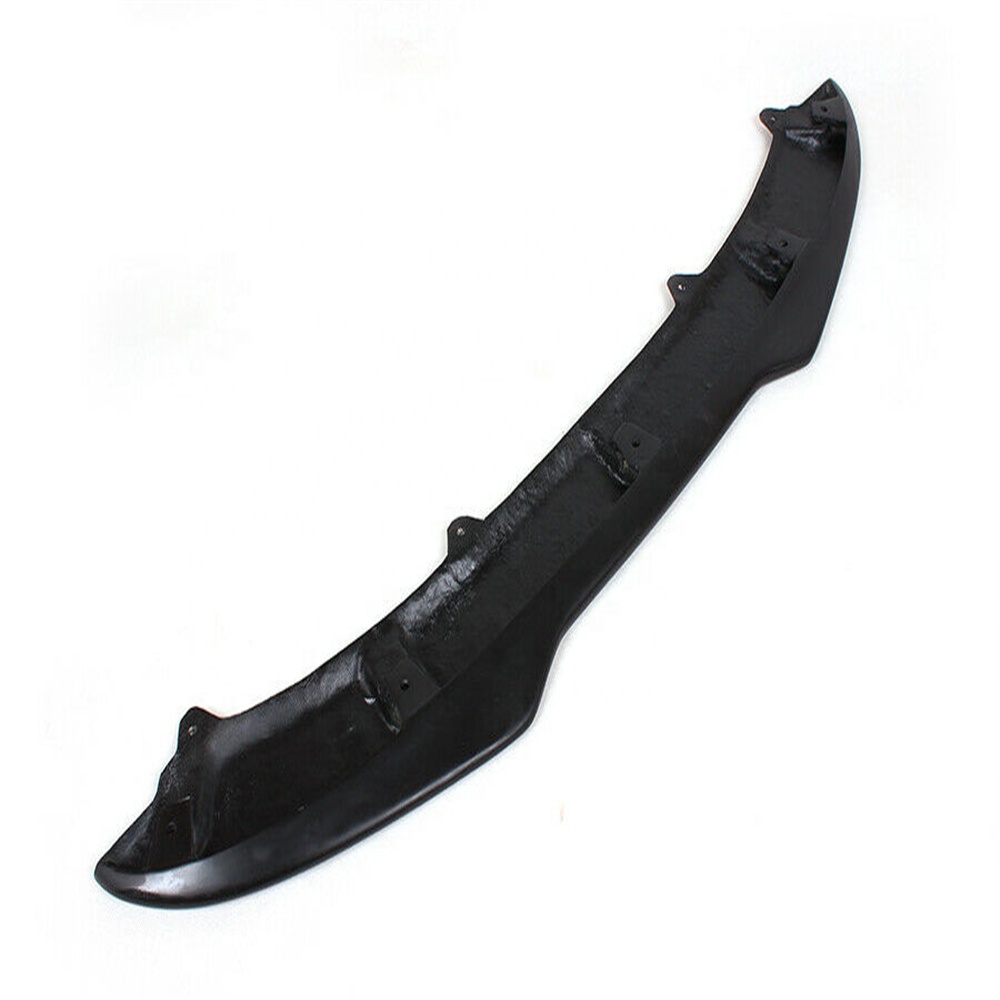
Open molding methods dominate low-volume manufacturing. The primary use case includes rapid prototyping, initial custom builds, and highly complex aerodynamic shapes. These methods offer drastically lower tooling costs because molds only require a single finished face. However, open molding depends entirely on operator skill to maintain consistent wall thickness. It also produces a single-sided finish. The reverse side remains rough and typically requires secondary machining before vehicle integration.
Closed molding processes excel in consistency. Utilize Resin Transfer Molding (RTM) or Vacuum Assisted Resin Transfer Molding (VARTM) for mid-to-high volume OEM production. These methods deliver double-sided surface precision. They guarantee high repeatability across thousands of units. The primary trade-off involves high initial mold costs, which you must amortize over scale. VARTM notably improves the final strength-to-weight ratio. It strictly controls resin infusion via negative pressure, drawing out excess resin and leaving a highly compacted, dense fiber structure. OEM Fiberglass Auto Parts benefit massively from this density.
Open vs. Closed Molding Chart | ||||
Process Type | Initial Tooling Cost | Production Volume | Surface Finish | Operator Dependency |
|---|---|---|---|---|
Open (Hand Lay-Up) | Low | Low to Medium | Single-sided | Extremely High |
Closed (RTM/VARTM) | High | Medium to High | Double-sided | Moderate to Low |
Your tooling strategy dictates overall manufacturing efficiency. Differentiate clearly between one-piece and two-piece molds during the engineering phase. Base this decision on edge complexity, specific draft angles, and part symmetry. Deep draws or complex undercuts strictly require multi-piece modular molds. Proper mold design ensures consistent demolding without causing micro-fractures or part degradation.
Analyze the direct impact of factory temperature and moisture on your production line. These environmental variables alter MEK (Methyl Ethyl Ketone) catalyst ratios significantly. Low factory temperatures require precise catalyst increases to initiate proper cross-linking. Conversely, excessive heat risks premature curing, leaving fibers dry and brittle. You must also monitor ambient humidity. Moisture severely weakens polyester laminates, compromising the structural integrity before the part ever leaves the facility.
You must enforce Non-Destructive Testing (NDT) protocols. Look beyond basic visual inspection. Visual checks cannot uncover internal flaws hidden deep within the dark resin matrix.
Ultrasonic Testing: Use high-frequency sound waves to measure material thickness and locate deep internal voids.
X-Ray Inspection: Require radiographic testing to detect sub-surface air pockets and hidden delamination in critical structural mounts.
Regulatory compliance protects your product liability and ensures driver safety. Validate material fire ratings rigorously. Require the direct application of Intumescent Fire Retardant (IFR) coatings to meet ASTM E-84 standards. Never assume standard commercial resins meet strict automotive fire codes. Furthermore, demand comprehensive mechanical testing reports prior to full-scale production. These reports must clearly outline tensile limits, compressive thresholds, and flexural fatigue capabilities.
Common Quality Control Mistakes:
Relying solely on visual checks for structural mounting points.
Ignoring seasonal humidity shifts in the primary lamination room.
Accepting verbal assurances instead of documented MEK catalyst logs.
Assess a fabricator's tooling and prototyping capability early in the discussion. Check if the supplier handles mold design and plug creation strictly in-house. Determine if they utilize modular tooling strategies for scaling part sizes later. In-house tooling control drastically reduces lead times. It also prevents miscommunication between external mold makers and the actual lamination team.
Evaluate their post-processing competence thoroughly. Quality FRP Automotive Parts require precise finishing to fit automotive assembly lines. Look for proven expertise in precision die-cutting and automated robotic trimming. Hand-trimming often yields inconsistent tolerances and rough edges. You should also verify their ability to handle multi-part structural assembly using automotive-grade core bonding agents. Modern panels often require bonded reinforcement ribs.
Verify the facility's ability to machine high-density composites. Components sometimes incorporate rigid backing materials like G10 fiberglass laminate. These ultra-dense materials require specialized, abrasion-resistant tooling. Standard steel router bits degrade rapidly against dense fiberglass, leading to burned edges and out-of-spec dimensions. Diamond-tipped or solid carbide tools are absolute necessities.
Factor in the supplier’s commitment to sustainable manufacturing and ESG principles. The composites industry faces strict environmental scrutiny. Look for VOC (Volatile Organic Compound) emission capture systems above the molding stations. These systems capture harmful styrene off-gassing. Investigate their resin waste recycling programs. Factories demonstrating strong environmental controls generally display higher operational maturity and better overall quality management.
Procuring reliable composite components requires a structured decision framework. Material specification must always lead the conversation. You then align your chosen molding process strictly with your expected production volume. Finally, you enforce strict QA and NDT validation before accepting any parts. Recognize that the lowest per-part quote often masks inadequate tooling investments. Cheap bids frequently hide poor environmental controls during the sensitive curing phase. Do not compromise on these technical fundamentals. Your immediate next step is to initiate a highly detailed Request for Quote (RFQ). Specifically ask suppliers for their standard material lay-up formulas. Request clear mold amortization schedules. Most importantly, demand sample NDT reporting from their recent automotive projects.
A: Moisture in the production environment or trapped during storage severely weakens the physical properties of polyester laminates. It actively interferes with the chemical cross-linking of the resin molecules. This compromises both structural integrity and surface finish, requiring strictly climate-controlled facilities for reliable production.
A: A multi-stage process is required. Technicians begin by waxing and polishing the mold surface thoroughly. They then apply PVA (Polyvinyl Alcohol) to form a barrier film. This ensures a smooth finish and prevents the composite part from permanently bonding to the tooling surface.
A: Warping is typically caused by uneven layering or an improper ratio of MEK catalyst to resin. These errors create uncontrolled, excessive exothermic heat during the curing phase. This intense thermal stress permanently distorts the panel and severely compromises its elasticity.


 info@xhyfrp.com.cn
 86-15801078718
 Plant No.4, Area E, Nanju Industrial Park,Hangbu Town, Shucheng County, Anhui, China


