
 86 158 01078718
 86 551 65628861
Views: 0 Author: Site Editor Publish Time: 2026-08-17 Origin: Site


Engine bays represent hostile, high-heat environments. You are completely right to feel skeptical about this setup. Placing composite materials near glowing exhaust manifolds and hot engine blocks seems dangerous. However, a crucial distinction exists. Raw glass fibers possess immense heat resistance. They handle extreme temperatures beautifully. The actual limiting factor is always the chemical resin matrix holding the fibers together.
We built this guide to define the true thermal limits of fiberglass composites. We will separate standard manufacturing from specialized high-temp engineering. You will learn exactly how heat affects these materials. We also provide a reliable framework for evaluating custom composite designs. By the end, you can confidently specify the right materials for your build without risking catastrophic failure.
Resin Dictates Survival: Standard polyester fiberglass begins warping at 140°F–160°F, while specialized high-temp epoxy matrixes can withstand 300°F–400°F+.
Thermal Shielding is Mandatory: Standalone fiberglass is rarely sufficient; successful applications rely on reflective thermal barriers (e.g., specialized foils) and physical air gaps.
Ventilation Beats Insulation: Poorly designed covers trap heat, degrading the cover and potentially raising engine operating temperatures. Proper standoff mounts and venting are non-negotiable.
Specifying the Right Material: Choosing an FRP automotive engine cover requires matching the part's physical proximity to heat sources with the correct glass transition temperature (Tg) rating.
Vehicles generate immense heat. When you aggressively operate a vehicle, under-hood temperatures skyrocket. Even idling in traffic causes severe heat soak. The typical ambient temperature of a working engine bay easily exceeds 200°F. This ambient heat constantly surrounds every component.
You must differentiate between ambient under-hood heat and direct radiant heat. Ambient heat is the general air temperature. Radiant heat comes directly from exhaust headers, turbochargers, or catalytic converters. Radiant heat sources routinely exceed 1,000°F. If you place a composite part near these sources, it absorbs massive thermal energy.
Understanding composite failure requires looking at the science. We measure this using the Glass Transition Temperature (Tg). Fiberglass does not melt like a simple plastic bottle. Instead, the resin binding the glass fibers softens. When the temperature surpasses the resin's Tg, the molecular structure relaxes. This softening leads to immediate problems. The cover begins structural sagging. You will see blistering on the surface. Eventually, delamination occurs. The layers of glass separate, destroying the part entirely. If you want a durable Fiberglass Engine Cover, you must respect these thermal limits.
The raw glass fabric matters very little for heat resistance. The resin system determines everything. Manufacturers use three primary resin types. Each offers vastly different thermal properties.
Polyester resin offers extremely low cost. Most cheap aftermarket parts use it. However, it presents severe limitations. Polyester is completely unsuitable for engine covers. It begins to soften around 140°F to 150°F. If you install a polyester part under the hood, it will warp almost immediately.
Vinylester serves as a versatile mid-tier option. It provides better thermal stability than polyester. It also offers excellent chemical resistance against oil and corrosive fluids. Vinylester handles indirect heat exposure reasonably well. It survives up to roughly 200°F. We recommend it only for parts placed far from exhaust components.
High-temperature epoxy provides the ultimate solution. Durable under-hood parts demand this high-end chemistry. Specialized high-Tg epoxies easily survive 300°F+ continuous use. Aerospace and motorsport industries rely heavily on these formulations. They maintain absolute structural rigidity under severe thermal stress.
Buying high-temp resin is only the first step. Even the best epoxies fail if manufacturers skip post-curing. Post-curing involves step-baking the finished part in a controlled oven. This process fully cross-links the polymers. It permanently locks in the thermal stability. A room-temperature cured epoxy will never reach its advertised Tg rating.
Resin Type | Approximate Tg Limit | Engine Bay Suitability | Ideal Application |
|---|---|---|---|
Standard Polyester | 140°F - 160°F | Poor (Will Warp) | Exterior body kits, audio enclosures |
Vinylester | 180°F - 220°F | Moderate | Fluid reservoirs, intake tubes |
Standard Epoxy | 200°F - 250°F | Good | General under-hood styling panels |
High-Temp Epoxy (Post-Cured) | 300°F - 400°F+ | Excellent | Direct engine covers, heat shields |
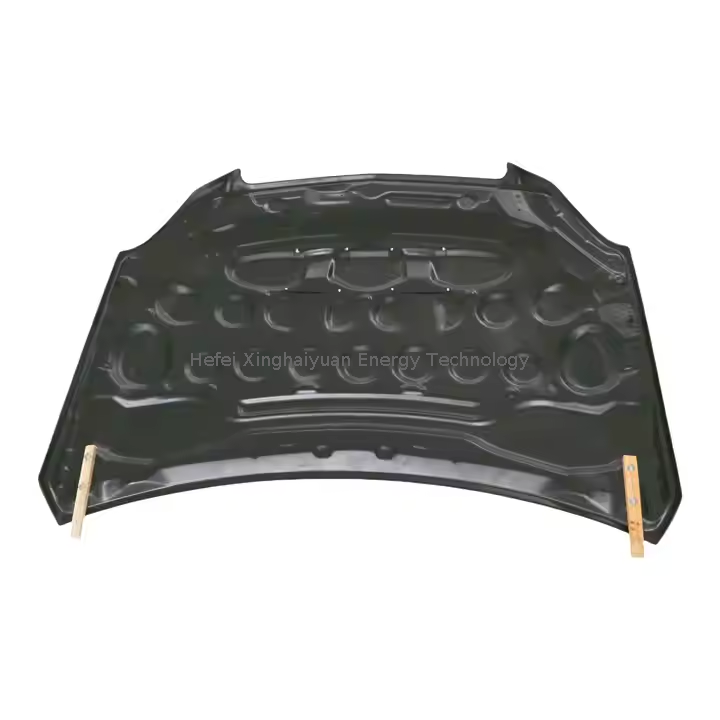
Poor implementation destroys even the best materials. You must anticipate how an FRP automotive engine cover interacts with its environment. Several major risks threaten longevity.
Heat attacks the surface finish first. Localized hot spots cause severe damage. You will commonly observe:
Spider-web cracking across the gel-coat finish.
Discoloration or yellowing of the clear coat.
Resin blistering beneath the paint.
Micro-fractures along sharp geometric bends.
These issues occur rapidly on poorly shielded covers. The radiant heat literally cooks the outermost cosmetic layer.
Car enthusiasts often debate the "heat trap" myth on forums. They worry covers destroy engines. They have a valid point. Thick composites act as incredible insulators. If you enclose the top of an engine, you block natural heat dissipation. The part traps heat against the intake manifold or block. This trapped heat artificially increases operating temperatures. It forces the cooling system to work harder. You must ventilate the cover to prevent this.
Engines move constantly. When you accelerate, engine torque causes significant flexing. Weak motor mounts amplify this movement. If you mount a cover too closely, torque flex causes contact. The cover repeatedly rubs against hot components. Friction accelerates thermal failure. Direct physical contact transfers heat exponentially faster than air. You must design adequate clearance to account for engine sway.
You cannot treat these parts like simple aesthetic shells. They function as engineered thermal systems. A successful custom vehicle engine cover requires specific integrations.
Reflective Heat Barriers: You must deflect radiant energy. Apply gold or aluminized heat-reflective tape to the underside. These specialized foils bounce radiant heat away. They prevent the resin from absorbing the energy.
Air Gap Standoffs: Never mount composites flush against the block. Require custom mounting brackets. Standoffs elevate the part away from the metal. This physical air gap allows convective airflow. The moving air scrubs heat away from the fiberglass underside.
Strategic Venting: You must give trapped heat an escape route. Integrate louvers into the top surface. Use mesh cutouts near high-heat zones. Proper venting extracts hot air out of the engine bay. It eliminates the dangerous insulation effect.
Protective Coatings: Protect the exterior finish proactively. Use high-temp ceramic clear coats. Spray ceramic engine paints over the gel-coat. These coatings resist ambient degradation far better than standard automotive urethanes.
Builders often wonder if alternatives perform better. Every material presents a specific trade-off between cost, thermal limit, and weight.
ABS plastic offers the lowest entry cost. However, it carries extreme thermal risks. While OEM manufacturers use heavily engineered, heat-stabilized plastics, aftermarket ABS usually fails. Standard ABS features high warping potential. It melts and sags under moderate load.
FRP stands as the versatile middle ground. It proves excellent for molding complex custom shapes. It remains highly cost-effective for low-volume production. When manufactured with high-Tg epoxy and thermal shielding, it performs flawlessly.
Many buyers incorrectly assume carbon fiber is immune to heat. This is a massive misconception. Carbon fiber utilizes the exact same resin systems as fiberglass. Therefore, it suffers the exact same temperature limitations. The thermal constraints remain nearly identical. You buy carbon fiber for structural rigidity and weight reduction, not superior heat tolerance.
Metals provide maximum heat dissipation. They cannot melt under standard engine conditions. However, custom aluminum fabrication costs thousands of dollars. Metals also suffer from aggressive heat-soak characteristics. They absorb heat and radiate it back into the bay.
Material | Relative Cost | Thermal Risk Profile | Structural Rigidity |
|---|---|---|---|
Aftermarket ABS Plastic | Low | High (Melts easily) | Low to Moderate |
Standard FRP | Moderate | Medium (Requires shielding) | Moderate to High |
Carbon Fiber | High | Medium (Shares FRP resin limits) | Very High |
Fabricated Aluminum | Very High | Low (Prone to heat soak) | High |
Never purchase composite components blindly. Use a systematic approach to specify your requirements. This framework protects your investment.
Before commissioning a fiberglass engine cover, interrogate the manufacturer. Ask these specific questions:
What specific resin system do you use, and what is its stated Tg?
Do you post-cure the part in a dedicated oven, or just room-temperature cure it?
Does your design include integrated standoffs, or does it require direct block contact?
Do you pre-install reflective thermal foil on the underside?
Guide your decisions using physical measurements. Measure the exact clearance between the proposed location and the nearest exhaust component. If you have less than three inches of clearance near a turbocharger, you need maximum thermal protection. You might need to relocate brackets to ensure a safer distance.
Understand the real cost of cheap parts. A budget polyester cover costs less today. However, it will warp in a month. It will destroy your custom paint job. It might melt onto expensive engine sensors. A cheap cover costs significantly more in replacement fees. Investing upfront in properly shielded, high-temp epoxy guarantees a permanent solution.
A composite cover is completely capable of withstanding extreme under-hood temperatures. Success simply requires treating the part as an engineered thermal system. It is never just a simple aesthetic shell. Raw glass holds immense strength, but the resin demands respect.
You must specify high-temp epoxy resins. You must mandate post-curing procedures. Furthermore, integrating reflective barriers and air gaps ensures long-term survival. Avoid cheap polyester materials at all costs.
If you are planning a build, take action now. Consult with a professional composite fabricator about high-Tg epoxy options. Order high-quality thermal barrier materials to protect your existing components. Shield your investment properly from day one.
A: Fiberglass itself doesn't melt until over 1,000°F. However, the resin binding the fibers softens and warps between 150°F and 300°F. The exact failure point depends entirely on the chemical composition of the chosen resin.
A: It can, if it traps heat against the intake manifold. Proper design prevents this. You must utilize air gaps, standoffs, and ventilation cutouts to allow radiant heat to easily escape the engine bay.
A: No. Over-the-counter repair kits typically use cheap polyester resins. These inferior resins will rapidly warp, blister, and emit toxic fumes when exposed to normal operating temperatures.
A: Without heavy thermal shielding, composite parts should never sit closer than 3-4 inches to direct exhaust components. If tight clearances are unavoidable, you must use embossed aluminum heat shields and reflective foils.


 info@xhyfrp.com.cn
 86-15801078718
 Plant No.4, Area E, Nanju Industrial Park,Hangbu Town, Shucheng County, Anhui, China


