
 86 158 01078718
 86 551 65628861
Views: 0 Author: Site Editor Publish Time: 2026-06-05 Origin: Site


The modern, defining pattern of carbon fiber is iconic. It is characterized by sleek, metallic interwoven threads that focus on speed and strength. However, carbon fiber is more than a design. While it is used in space shuttles, luxury cars, and other automobiles, it doesn’t start or end there.
In this article, we’ll take a look at the history of carbon, its role in aftermarket parts, and its application in whole vehicles.
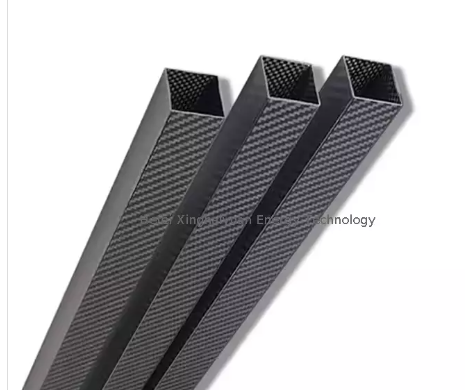
What you think of today as carbon fiber is not where it began. Carbon fiber was first discovered in the 19th century, precisely in 1860, by Joseph Swan. He created carbon fiber to act as a filament for a light bulb.
Joseph Swan collaborated with Thomas Edison. Their collaboration yielded good results, in such a way that what began as carbonized paper filament turned into carbonized bamboo filament.
Furthermore, heat treating the carbon filament allowed for shaping, added strength, and longevity.
We don’t see the first version of the carbon fiber that we know today until the 20th century in Cleveland, Ohio. Although it was a high-performance material at the time, it was not as strong or stiff as it is today.
In 1981, McLaren introduced carbon fiber to the automotive industry with the McLaren MP4. The Formula One car’s chassis was manufactured out of carbon fiber. The strength-to-weight ratio made it both safe and fast, and it quickly became the standard.
Carbon fiber is a polymer made from thin strands of carbon atoms joined together in a crystalline structure. These fibers are bonded with resin to form carbon fiber reinforced polymer (CFRP), a carbon composite known for its unmatched strength and low weight.
Carbon fiber has the following properties:
Material properties: Carbon fiber is a high-performance material consisting of carbon atoms. It is widely known for its high specific strength and stiffness, excellent fatigue resistance, and low thermal expansion.
Lightweight: Although carbon fiber possesses superior strength, it is up to 50% lighter than steel and also lighter than aluminum.
Modulus value: Carbon fiber has a high modulus value, which means it can withstand high-impact and stress forces.
Design flexibility: Carbon fiber has the ability to be molded into complex shapes and sizes. Hence, it allows for customization of unique designs.
Carbon fiber is used to make hoods. The hood is located at the front of the vehicle, meaning any weight reduction has an impact on handling and balance. By using carbon fiber, engineers can reduce front-end weight. This, in turn, improves steering responsiveness, acceleration, and weight distribution.
By using carbon fiber to design hoods, engineers also improve airflow management. This means car engines can run at high-speed or track speed for a period of time while maintaining stability.
Carbon fiber is used to make spoilers and wings, making vehicles aerodynamic, lightweight, rigid, and aesthetically pleasing. The high strength-to-weight ratio of carbon fiber makes it easy to manufacture parts that support aggressive driving.
Spoilers and wings are designed to increase downforce, meaning cars can ride on the road at high speeds. These parts are also designed to improve traction and stability. Using carbon fiber on these components reduces unwanted weight that can compromise control.
Carbon fiber is used to make splitters and diffusers, aero components that are placed in high-wear, high-impact zones. For instance, splitters are located at the front bumper, managing airflow by directing air around the vehicle. Using carbon fiber to manufacture it provides high strength to withstand road impact and debris, and adds minimal weight.
Diffusers, on the other hand, are located under the rear bumper. They accelerate airflow and improve stability. Using carbon fiber helps in precision shaping for optimized airflow.
Carbon fiber is used to manufacture car interiors, such as trims, seats, and door panels. In addition to keeping the vehicle lightweight, it gives it a premium, luxury appearance. Carbon fiber can also be combined with leather or aluminum to design unique finishes that will attract car enthusiasts to purchase them.
Carbon fiber is also used to manufacture mirror caps to enhance the side profile of the vehicle. These components increase durability and are wear-resistant.
Carbon fiber is used to make roof panels, the engine section and cover, the salon, and the boot. Using carbon fiber to manufacture these parts improves stability, reduces body roll, and enhances overall handling dynamics. Because the roof is one of the highest points on a car, using carbon fibers helps to reduce weight.
Furthermore, carbon fiber improves structural rigidity and strength, making it easy to define sections of a car.
Many high-performance cars use carbon fiber to manufacture the chassis reinforcements and subframe components. Carbon fiber is used to enhance structural bracing components. Incorporating this composite material ensures vehicles remain stable under stress and improves overall driving precision.
Adding carbon fiber to the manufacturing of cars also enhances the vehicle’s structural integrity while keeping the overall weight low. Carbon fiber’s strength allows manufacturers to design cars with strong parts without adding excessive weight.
Carbon fiber is used to make mechanical components, such as drive shafts, suspension arms, and brake rotors. It is also used to manufacture underbody panels and aerodynamic trays. These aftermarket parts benefit from the material’s strength, which helps to improve performance and reduce the weight of the car.
The corrosion resistance of carbon fiber makes it useful in meeting the regulations for crash performance, such as energy absorption and mechanical stresses.
Carbon fiber is used to manufacture battery enclosures, particularly in electric vehicles, also known as EVs. Carbon fiber is used to make high-voltage batteries, which are crucial for increased performance, cost-efficiency, and compatibility with different car models. Carbon fiber is used to make high-voltage batteries because it meets regulations for fire resistance, thermal management, and electromagnetic interference shielding.
Aftermarket applications should emphasize lightweight battery casings, structural housings, and protective layers that are resistant to impact.
Carbon fiber is a desirable material used to make interior wraps and components in luxury cars. It is used to make the steering wheel and gear stick, door linings, and other components where customization is needed. Carbon fiber is used to replace aluminum and plastic, making it the most popular material and finish available.
Carbon fiber is also used on components like instrument panels and pedal assemblies. It maintains high strength and safety standards in motorsports and sports cars.
Carbon fiber is largely used in the manufacturing of body components, including trunk lids, bumpers, fenders, and doors. It replaces traditional metal panels, leading to weight savings, improved acceleration and braking, and enhanced corrosion resistance. Carbon fiber composite is also used to make complex and aerodynamic designs, allowing manufacturers to go beyond standard designs into classical ones that appeal to car enthusiasts.
The lightweight structure of carbon fiber improves fuel efficiency and performance in vehicles.
Carbon fiber reduces weight in aftermarket car parts. This has a direct positive impact on performance, power, and torque. Lightweight cars travel the road faster and are more responsive and controllable. Lightweight cars also reduce stopping distance in emergencies.
The weight reduction of carbon fiber also leads to improved braking and better handling, especially in cornering. Furthermore, by enhancing splitters, diffusers, canards, and wings, it directly increases downforce and stability at higher speeds.
There is no doubt that carbon fiber elevates the aesthetics of car parts. Whether it is used to make interior or exterior parts, there is a unique texture that is associated with this composite material. Diffusers, vents, side mirrors, door handles, rear wings, and center console benefit from the aesthetic value of carbon fiber.
Aside from using it to make the interior and exterior parts, carbon fiber is also used for car wrapping. Unlike plastic or traditional metal, carbon fiber gives car parts a unique, premium, and professional finish that changes under light.
As mentioned earlier, carbon fiber composite has excellent strength. Yet, it is lighter than steel and other metals. This contributes to vehicle weight reduction by up to 50%. Lighter vehicles mean higher mileage, lower fuel costs, and a longer battery range, especially for electric vehicles.
This is why this luxurious material is used in modern aftermarket parts, contributing to noticeable improvements in long-term operating costs.
Carbon fiber components can be customized into different patterns, weaves, and finishes. There are gloss, matte, and forged weaves that match brand identity and preferences. This gives designers the freedom to play with shapes and styles, creating a unique model that would catch the eye.
Carbon fiber parts can be used for specific performance goals. For example, it can be used to improve aerodynamics or weight distribution of vehicles, depending on what designers want to achieve.
Luxury cars: In luxury cars, carbon fiber is used to enhance performance and craftsmanship. It is used to manufacture body panels and roofs to reduce weight while maintaining structural integrity. It is also used to manufacture interior elements such as dashboards, trims, and seats, for a luxurious finish. It is also used for chassis reinforcements to improve ride quality.
Passenger cars: Carbon fibers are used in passenger cars to manufacture structural components to reduce overall weight. They are also used to design body panels and reinforcements so that they can last longer. Combining carbon fiber and hybrid materials enhances safety and aesthetic value. Lower-weight vehicles also improve fuel efficiency as it reduces energy consumption.
Racing and sports cars: Carbon fibers are used in racing and sports cars to manufacture monocoque chassis for maximum strength and minimal weight. It is also used to manufacture bodywork, including wings, diffusers, and panels. Furthermore, it is used to manufacture suspension and structural components for precision handling. The benefits of it on these cars include extreme weight reduction and superior stiffness.
Electric vehicles: Electric vehicles need efficiency and an extended driving range. Carbon fiber is used to make battery enclosures, chassis, body panels, and protective structures. Using this material reduces vehicle weight, lowers energy consumption, improves performance, and enhances thermal stability. It is also used to protect sensitive battery components.
Incorporating carbon fibers in aftermarket parts and whole vehicles is just the beginning. While it has a high upfront cost, it has the potential to scale up over decades. In addition to the fact that cars are seeing a reduction in their total weight, they will see a renewed future as they are made of carbon fibers.
If you want to know more about carbon fiber manufacturing, reach out to our team at Hefei Xinghaiyuan Energy Technology Co., Ltd. We’ll always be here to satisfy your curiosity.
A:Yes, it is good to use carbon fiber for an entire car. Carbon fiber offers superior weight reduction, high strength, and superior handling. However, because of its high cost, it is not used for mainstream consumer vehicles.
A:Carbon fiber car parts can last for up to 20 years due to their non-corrosive properties. However, their lifespan depends on proper care and maintenance, which includes protective coating for UV rays.
A:Carbon fiber doesn’t rust or rot easily because it is highly resistant to corrosion and moisture. However, because it is bonded with epoxy resin, it can degrade from UV light if damaged. Hence, a protective coating is needed to enhance its durability.
A:Real carbon fiber is different from a fake one by its extreme lightweight, high rigidity, and a defining 3D woven pattern that shows structural fibers on the backside. Fakes are often heavier with a printed warp.
A:Yes, carbon fiber can be repaired by applying new carbon fiber fabric. It can also be repaired using epoxy resin. However, professional expertise is required to ensure safety.


 info@xhyfrp.com.cn
 86-15801078718
 Plant No.4, Area E, Nanju Industrial Park,Hangbu Town, Shucheng County, Anhui, China


