
 86 158 01078718
 86 551 65628861
Views: 0 Author: Site Editor Publish Time: 2026-06-03 Origin: Site


Car racing enthusiasts have long been familiar with carbon fiber on their favorite cars. Even manufacturers and designers use it on several applications - and for good reason. Carbon fiber is not just about making your car look sleek - it plays a vital role in improving safety.
Carbon fiber has the highest strength density of any material, making it a go-to choice in the automotive industry. Read through this article to learn how carbon fiber parts make cars safer.
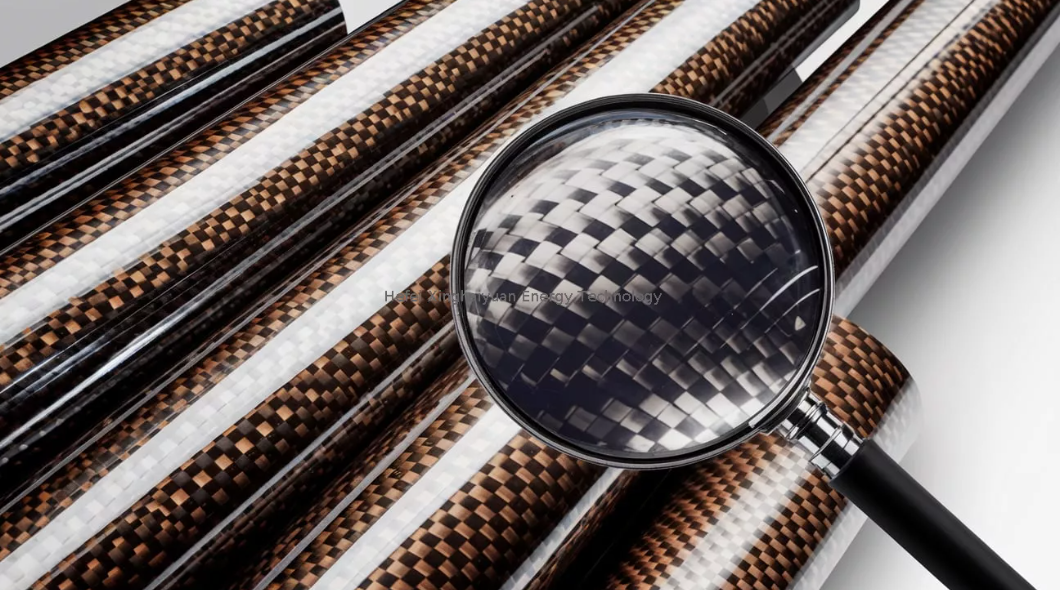
Carbon fiber is a type of material consisting of long carbon crystals that are bonded together to form a fabric. When the fabric combines with epoxy resin, it can twist to make complex shapes and designs.
Because of how the crystals are arranged naturally, carbon fiber is strong yet lightweight. Materials like cars that are manufactured from it are lighter but offer superior strength. This is why carbon fiber is replacing steel and aluminum in the automotive industry. For example, it is used to make body panels, structural chassis components, crash beams, energy absorbers, and roof pillars.
Here are a few properties of carbon fiber that attest to its excellent strength-to-weight ratio.
High tensile strength: Carbon has a high tensile strength that makes it resistant to breakage under tension.
Low density: It also has a low density that reduces overall vehicle weight, thus producing lightweight vehicles without compromising performance and efficiency.
Anisotropic behavior: Carbon fiber can be engineered in specific directions.
Carbon fiber has an exceptional impact resistance. Its unique weave structure is designed to withstand high-energy impacts without structural damage. The tightly woven carbon filaments, which are fixed within a strong polymer matrix absorbs and distribute energy more effectively than traditional metals.
When there is a collision, the force applied to the vehicle is absorbed and distributed across multiple layers of fibers. Instead of concentrating the stress on one point, it spreads it across the entire car. This protects the passenger and maintains the car’s structural integrity.
Furthermore, carbon fiber has a customization strength orientation. For example, car parts that are prone to frontal impact can be reinforced differently from parts that receive less impact. This ensures that each part delivers high resistance right where it is needed the most.
Carbon fiber parts can withstand high temperatures without deforming. This is why they are used in parts like engine bays and brake systems. It is crucial in extreme conditions such as engine overheating, brake system failures, or battery incidents, as in the case of electric vehicles.
Other metals, like steel, can soften, warp, or lose strength when exposed to heat. However, carbon fiber materials can withstand high temperatures without deformation. Thus, even during post-collision, where a fire outbreak is likely to happen, car parts retain their structural integrity.
In electric vehicles, battery systems may overheat and lead to fire. This is why carbon fibers are used to make battery enclosures and structural components so that they can prevent fire from spreading quickly, even if it occurs.
Carbon fiber is lightweight, much lighter than steel and aluminum. Thus, it is used to reduce a vehicle’s overall weight. How does this ensure safety? Lighter vehicles are easier to control and handle. They also have improved braking response and cornering stability - key factors that prevent accidents.
Drivers can operate lightweight vehicles effectively, avoid obstacles, and maintain better steering in emergencies. This is often the difference between a near-miss and a serious accident. Lighter vehicles also require shorter shopping distances, allowing drivers to react quickly to mishaps. Thus, manufacturers can reduce a vehicle’s weight without compromising strength.
Lighter vehicles also generate light energy during motion. When a collision happens, the low weight reduces the severity of the impact during accidents. This also reduces stress on the vehicle structure and its passengers.
One of the safety features of carbon fiber is its energy absorption. Unlike steel and aluminum, which absorb energy through deformation, carbon fiber absorbs energy through progressive failure. This means that as the impact force increases, the material begins to break in a controlled manner. This controlled manner distributes energy across several stages on the entire vehicle instead of concentrating it on a single point.
In addition, engineers can design car parts to crush or break in specific ways. This way, energy is directed away from critical areas. This cannot be achieved with other traditional materials, only with carbon fiber. Its superior energy absorption reduces the peak force transmitted to the passenger seat. This reduces the risk of injury, as passengers experience less impact during a crash.
Here are various ways in which carbon fiber’s structural integrity ensures car safety:
Monocoque chassis construction: Here, the car’s body and frame are built into a single structure. Carbon fiber provides exceptional rigidity for these parts, enabling them to maintain shape even under impact forces.
Passenger safety cell: This is the area that protects passengers during a crash. When the crash occurs, carbon fiber resists the impact and prevents external forces from penetrating the safety cell. This reduces injury and keeps passengers safe in the vehicle.
Fatigue resistance: The material can withstand repeated stress without fatigue. It does not weaken over time; rather, it retains its properties even after extended use. This enhances the durability of cars.
Precision engineering: The material allows designers to create parts with exact dimensions, ensuring efficient load distribution and removing weak points.
Corrosion and rust can weaken car parts over time, increasing the risk of failure. These conditions can spread quickly and often unnoticed, and can negatively influence the chassis, suspension mounts, and other safety structures. Steel is prone to rust, whereas carbon fiber has excellent corrosion resistance. This means it does not rust, rot, or degrade when exposed to environmental conditions such as UV exposure, salt, moisture, and chemicals.
Carbon fiber ensures that car parts remain durable and are safe in the long term. Thus, car parts made with this material do not often experience structural weakness. This provides car enthusiasts and drivers with confidence in their property.
Furthermore, corrosion resistance translates to low maintenance costs. You don’t need frequent inspection or repairs related to rust damage.
Carbon fiber is used to make car hoods. Due to its lightweight property, it reduces the weight above the car’s center of gravity, improving stability during handling, control, and braking. This can help to reduce the severity of impact during a crash or collision.
When a crash occurs, carbon fiber hoods are designed to break in a controlled manner, instead of suddenly. This way, it absorbs energy before it even reaches critical parts like the engine block. By doing so, it reduces the force transmitted to the passenger area.
Furthermore, its lightweight property reduces the risk of server injury in accidents. Unlike traditional materials such as steel or aluminum, less force is exerted during a crash.
Car parts have roof and pillars (A, B, and C pillars that need to have integrity, especially during side impacts. By using carbon fiber to make roof and pillar reinforcements, the material is able to absorb the impact force effectively, reducing the risk of impact penetration during accidents. This is mostly seen in luxury and high-performance vehicles.
For example, in rollover accidents, the roof must support the vehicle’s weight so that it does not cause severe damage to it. The stiff nature of carbon fiber enables the roof to maintain its shape, even after a crash, protecting the passengers within the vehicle. It also provides resistance against indirect impact on the passenger area. By doing this, it ensures safety in the long term.
One of the core parts of a car is the passenger safety cell. This area is the protective shield that surrounds those in a car. It needs to be made of a rigid structure for high performance. Carbon fiber is used to create strong, impact-resistant safety “rooms” that preserves surival for passengers during crashes or accidents.
The material is not like steel or aluminum that deforms under pressure. Instead, it maintains it shape even when it is hit, and it absorbs and redistributes energy so that the stress will not be concentrated on a single point. By doing so, it ensures that even in high-speed collisions, passengers remain safe, intact, and with less injury.
Chassis components, like the crossbars and suspension parts, form the foundation of a vehicle as they support other parts of the car. These parts also absorb energy and load during operation and impact. Hence, they need to be made with a strong material to optimize crash performance. Where steel and aluminum fail, carbon fiber comes to the rescue.
Carbon fiber maintains the structural integrity of your vehicle while improving its safety dynamics. It is used to reinforce the chassis components to achieve enhanced stiffness, which will in turn improve stability. It is also used to ensure better load distribution during collision and to reduce deformation under stress. The integration of this material is also seen in airbags and seatbelts, enabling them to function effectively.
The seats of a car need to be strong, not only for extended use, but also in the event of a collision. Seats in racing cars, for instance, need rigidity and stiffness to keep the car and passenger balanced and secure. Designers have always sought materials that will bring these key qualities to light. Carbon fiber was the answer.
Carbon fiber provides better support and durability to vehicles, keeping passengers securely positioned during a crash. This rigid support structure is important for proper seatbelt function, reducing movement in the car, and reducing the risk of spinal injuries.
In luxury and high-performance vehicles, carbon fibers are used with restraint systems to provide protection and ensure the overall safety of the vehicle.
In cars, crash structures are non-negotiable. They are engineered to absorb and manage shock and impact energy when a collsion happen. Amongst materials used to produce cars, carbon fiber tops them all in this regard. This is why it is used to make crash boxes and impact beams so that they can undergo controlled failure when a collision occurs.
Using carbon fiber to design crash structures absorbs energy before it reaches other critical components of the car. It also reduces peak impact forces and protects other car parts like the engine and battery from damage.
Since carbon fiber breaks progressively, not suddenly, it can distribute energy across different stages rather than all at once. This ensures passenger safety when they’re on the road.
After reading this article, you’ll agree that carbon fiber provides strong and safe features for modern cars. They can bend into any shape, but do not deform when an accident occurs. This is why manufacturers are using it on luxurious cars around the world. If you’re seeking a safe and lightweight ride, carbon fiber cars are your go-to.
If you want to learn more about this or partner with us for your next project, contact Hefei Xinghaiyuan Energy Technology Co., Ltd.
A:While carbon fiber is stronger than steel, it offers different safety features that are advantageous depending on your application. It is lightweight, corrosion-resistant, and absorbs energy during a crash.
A:Yes, carbon fiber cars can be driven every day as long as they are manufactured properly and well-maintained.
A:Here are some tips to protect carbon fiber car parts: (1) apply protective coating to protect from UV rays, (2) clean regularly with a mild soap, water, and a microfiber cloth, (3) park in shaded areas to avoid direct sunlight, and (4) protect against scratches.
A:Carbon fiber can last up to 10 years under direct sunlight before showing degradation. With a protective coating, it can last longer.


 info@xhyfrp.com.cn
 86-15801078718
 Plant No.4, Area E, Nanju Industrial Park,Hangbu Town, Shucheng County, Anhui, China


