
 86 158 01078718
 86 551 65628861
Views: 0 Author: Site Editor Publish Time: 2026-09-29 Origin: Site


Commercial truck exteriors take a massive beating on long-haul routes. High-frequency vibrations rattle mounting brackets for thousands of miles. Road debris constantly strikes the front profile at highway speeds. Extreme temperature shifts test the physical limits of every exterior component. When aerodynamic parts fail prematurely, fleet operations suffer compounding problems. Degraded fuel efficiency eats directly into route profitability. Unplanned downtime for repairs disrupts tight logistics schedules, and frequent replacement cycles drain maintenance budgets. Fiber-Reinforced Polymer (FRP) stands as the industry standard for heavy-duty aerodynamic parts. Fleet managers need to evaluate its structural properties and lifecycle value compared to traditional metals. We will look at the implementation realities for fleet procurement. Understanding these engineering principles ensures better component selection for extreme highway environments.
High Strength-to-Weight Ratio: FRP provides the structural rigidity necessary to withstand highway-speed wind shear without adding payload-reducing weight to the tractor.
Environmental Resilience: Inherent resistance to moisture, UV degradation, extreme temperatures, and corrosive road salts extends the lifecycle of a fiberglass truck air deflector significantly beyond traditional metals.
Impact and Fatigue Resistance: Unlike aluminum, FRP absorbs minor impacts without permanent deformation, resisting the dings, dents, and scratches that compromise aerodynamic profiles over hundreds of thousands of miles.
Heavy-duty trucks operate in brutal physical environments. Success criteria for fleet exterior components require exceptional baseline durability. Vibration tolerance ranks as a top priority for any rig running cross-country. Diesel engines generate continuous low-frequency vibrations that travel directly through the chassis. Road surfaces introduce unpredictable high-frequency shocks from potholes, expansion joints, and uneven pavement. Aerodynamic components must absorb these forces without transferring stress to the cab structure. Continuous wind load resistance is equally critical. A truck traveling at 70 mph generates massive wind shear. The fairing must maintain its exact shape under this constant pressure. Dimensional stability across diverse climates prevents the material from warping or degrading over time.
Material failure carries significant hidden costs. A compromised fairing disrupts optimized airflow. This disruption increases aerodynamic drag immediately. Increased drag forces the engine to burn more fuel to maintain speed, destroying route profitability. Structural degradation also causes localized stress on cab mounting points. When a fairing loses its rigidity, wind forces pull violently on the brackets. This action can tear mounting hardware directly out of the cab roof. Damaged or loose components also invite DOT compliance issues. Inspectors frequently flag jagged edges or unsecured exterior parts during weigh station checks. You must maintain structural integrity to avoid these compounding operational penalties.
Continuous Highway Wind Shear: Sustained speeds create a permanent pressure wall against the front profile, testing the tensile strength of the material.
Chassis Torsion: Uneven loading docks and tight maneuvers twist the truck frame, stressing rigid mounting points and requiring flexible exterior panels.
Debris Impacts: Flying gravel, retread tire chunks, and ice blocks strike the lower fairings daily, demanding high impact resistance.
Chemical Exposure: Magnesium chloride and rock salt spray coat the exterior during winter operations, accelerating corrosion on vulnerable metals.
Crosswind Yaw Angles: Lateral winds push against the side profiles, requiring structural rigidity to prevent panel flutter and aerodynamic stall.
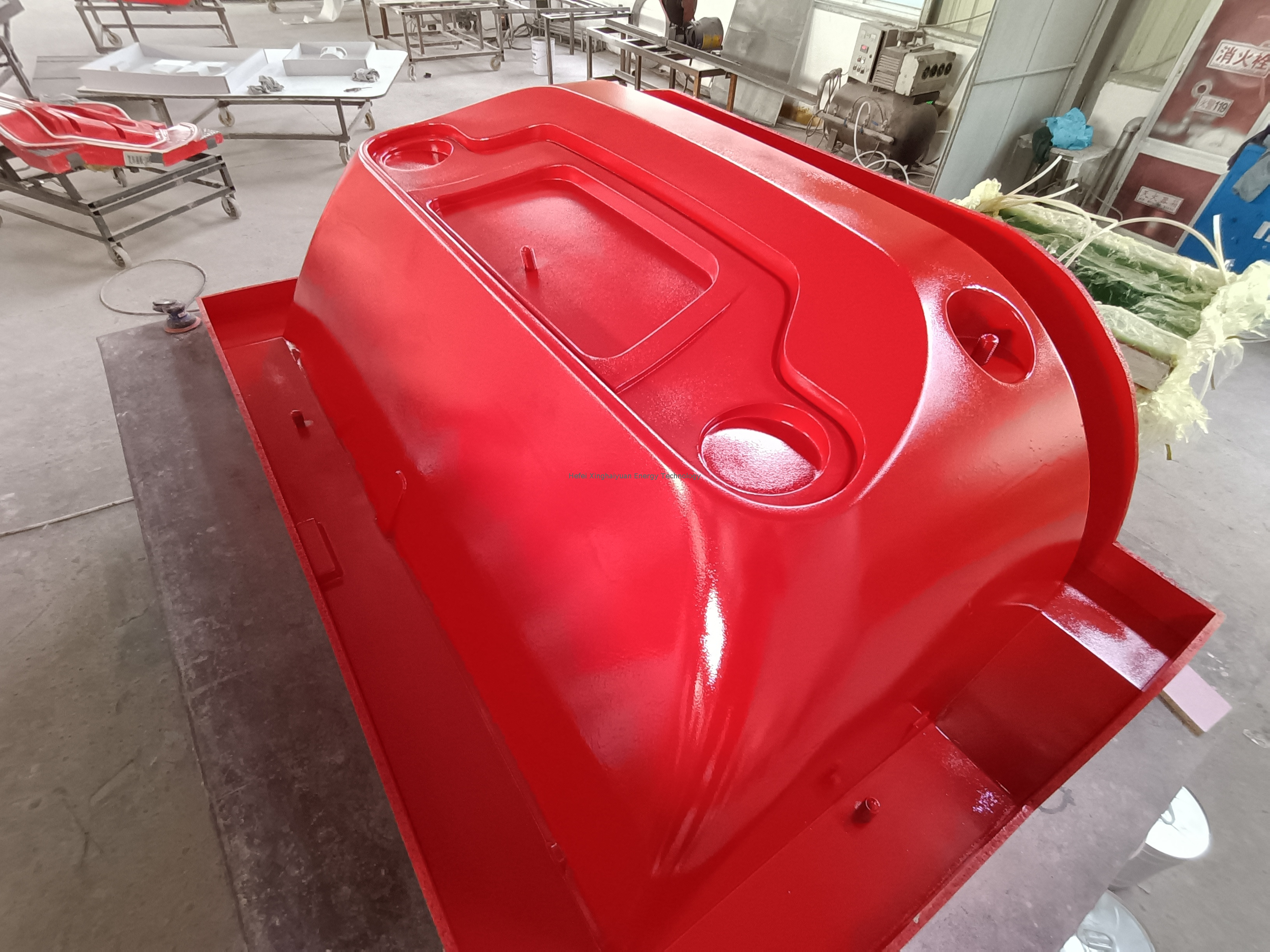
FRP relies on a sophisticated composite structure. Manufacturers suspend woven glass fibers within a rigid polymer matrix. The glass fibers provide immense tensile strength. The polymer matrix binds them together and provides compressive strength. This combination dissipates kinetic energy exceptionally well. When flying gravel strikes an FRP truck fairing, the matrix flexes slightly. It absorbs the impact energy and distributes it across the fiber network. This mechanism prevents the deep dings and surface scratches common in metal alternatives. It maintains a smooth surface for optimal airflow.
Weathering destroys inferior materials quickly. FRP offers superior chemical resistance against environmental threats. Manufacturers apply specialized gel coats during the molding process. These gel coats act as a sacrificial barrier against UV degradation. They prevent the underlying polymer from becoming brittle under intense sunlight. The non-porous surface also eliminates moisture intrusion. It completely removes the risk of rust, rot, mold, and mildew. High-humidity environments or routes heavily treated with corrosive winter road salts cannot penetrate this chemical barrier.
Long-haul routes subject vehicles to extreme temperature swings. A truck might start in freezing northern conditions and end in intense desert heat. FRP maintains its structural integrity through these transitions. It possesses a very low coefficient of thermal expansion. The material does not warp, expand, or crack when temperatures change rapidly. It holds its molded shape perfectly. This thermal stability ensures the mounting brackets do not experience shear stress from expanding panels.
Weight reduction directly impacts payload capacity and fuel economy. FRP offers a massive strength-to-weight advantage over traditional metals. We analyze the specific gravity of fiberglass composites to understand this benefit. It provides the heavy-duty durability of steel at a fraction of the weight. Fleets achieve necessary structural rigidity without sacrificing fuel economy to excess component mass. You get a lighter tractor that cuts through the wind effectively.
Tensile Strength: Woven glass fibers resist pulling forces from wind drag, keeping the fairing firmly attached to the cab roof.
Compressive Strength: The polymer matrix withstands direct frontal impacts from birds, ice, and road debris without shattering.
Thermal Stability: Minimal expansion prevents mounting hole elongation, keeping bolts tight and secure across all climates.
Chemical Inertness: Resists degradation from diesel fuel spills, hydraulic fluid leaks, and harsh truck wash detergents.
Vibration Dampening: The composite structure naturally absorbs high-frequency road noise, reducing driver fatigue inside the cab.
Fleet managers often compare FRP to aluminum for exterior components. Aluminum offers good initial weight savings but fails in long-term durability. We must look at corrosion resistance and dent memory. Aluminum relies on plasticity. When struck by debris, it dents and stays dented. The metal stretches and deforms permanently. A Fiberglass Truck Air Deflector relies on elasticity. It flexes upon impact and returns to its original shape. Aluminum also suffers from long-term fatigue under constant vibration. It work-hardens over time and eventually cracks near the mounting rivets. FRP maintains a smooth, scratch-resistant surface while aluminum becomes easily marred and structurally compromised.
Unreinforced plastics like ABS and polycarbonate present different challenges. They lack the necessary engineering properties for long-haul applications. Unreinforced plastics suffer from severe UV-induced brittleness. Sunlight breaks down their polymer chains rapidly. They also exhibit high thermal expansion and contraction rates. This movement tears mounting holes and causes stress fractures. Most importantly, they lack structural rigidity at highway speeds. A plastic fairing will flutter and deform under heavy wind loads. This deformation destroys the aerodynamic profile and negates any fuel-saving benefits.
Material Property | FRP (Fiberglass) | Aluminum | ABS / Polycarbonate Plastic |
|---|---|---|---|
Impact Memory | Elastic (bounces back, resists dents) | Plastic (dents permanently) | Prone to cracking under heavy impact |
Vibration Fatigue | High resistance, absorbs shock | Low resistance, prone to cracking | Moderate, tears at mounting points |
Thermal Expansion | Very low (dimensionally stable) | Moderate | High (warps in extreme heat) |
Corrosion Resistance | Immune to rust and road salts | Oxidizes over time | Immune to rust, susceptible to UV |
Repairability | Excellent (can be patched and re-gelcoated) | Poor (requires cutting and welding) | Very Poor (usually requires full replacement) |
Manufacturing methods dictate the final durability of aerodynamic components. Custom molding allows for seamless, single-piece construction. This process eliminates the need for rivets, seams, and mechanical joints across the main body. Mechanical joints represent inherent weak points in any structural design. Structural fatigue typically originates at these seams due to continuous vibration. By eliminating them, custom truck exterior parts distribute wind loads evenly across the entire surface area. The single-piece design dramatically increases the overall lifespan of the component.
Precision molding also enables exact aerodynamic optimization for specific cab profiles. A generic fairing leaves gaps and creates turbulent airflow. Turbulent air increases drag and reduces fuel efficiency. Custom molding ensures the fairing matches the precise dimensional requirements of the tractor roof. This exact fit guides air smoothly over the trailer gap. It significantly lowers drag to improve long-distance fuel efficiency. It also minimizes the wind shear stress transferred to the mounting hardware. A perfect fit means the wind pushes the truck forward rather than tearing the fairing backward.
The open-mold and closed-mold processes dictate the fiberglass-to-resin ratio. High-quality manufacturing utilizes vacuum infusion to pull resin evenly through the fiberglass mat. This technique prevents resin pooling and dry spots. A consistent ratio ensures uniform strength across the entire panel. Hand-laid fiberglass often suffers from inconsistent thickness, leading to heavy spots that stress mounting brackets. Vacuum-infused parts maintain strict weight tolerances while maximizing structural rigidity.
Aerodynamic components must deliver measurable returns over their operational lifespan. Fuel efficiency gains represent the largest payback category. You can calculate these savings over a standard 100,000-mile annual lifecycle. Maintaining an uncompromised, highly aerodynamic profile reduces fuel consumption by notable margins. Even a minor reduction in aerodynamic drag translates to thousands of gallons saved across a fleet. A durable fiberglass truck air deflector maintains its exact shape year after year. It does not flutter, dent, or deform. This consistency ensures your fuel savings remain stable throughout the life of the vehicle.
Maintenance, repair, and lifecycle longevity further drive the value proposition. FRP offers exceptional repairability. If a severe impact damages the fairing, technicians can patch the fiberglass. They grind the damaged area, apply new glass and resin, and re-gelcoat the surface. The repaired section regains its original structural integrity. You cannot perform this type of seamless repair on damaged aluminum or plastic fairings. Metal requires cutting, welding, and riveting. Plastic usually requires total replacement. The ability to repair rather than replace keeps maintenance budgets under control and reduces vehicle downtime.
Damage Assessment: Inspect the impact zone for spider cracking that indicates deeper structural compromise beneath the gel coat.
Surface Preparation: Grind away the damaged gel coat and fractured fiberglass down to solid, undamaged material.
Resin Application: Layer new fiberglass matting with catalyzed resin to rebuild the structural thickness and restore rigidity.
Curing and Sanding: Allow the patch to cure fully before sanding it flush with the original aerodynamic profile.
Gel Coat Restoration: Apply a color-matched gel coat to seal the repair, restore UV protection, and prevent moisture intrusion.
Even the most durable fairing fails if you install it poorly. Mounting hardware vulnerabilities represent a significant implementation risk. A fairing is only as durable as its brackets. Rigid metal brackets transfer cab vibrations directly into the fiberglass. This transfer causes stress fractures at the attachment points over time. You must use vibration-dampening, corrosion-resistant mounting systems. Rubber isolators absorb the high-frequency shocks before they reach the fairing. Stainless steel hardware prevents galvanic corrosion and rust from weakening the structural connection.
Quality control in FRP manufacturing varies wildly between suppliers. You must establish strict criteria for evaluating manufacturers. Poor manufacturing processes compromise the structural integrity of the final part. Look for resin-starved areas during inspection. These areas appear whitish and dry, indicating the glass fibers lack polymer support. Check for air voids trapped beneath the gel coat. These voids create weak spots that shatter upon impact. Ensure the manufacturer applies an adequate gel coat thickness to guarantee long-term UV protection. Request detailed material specification sheets before finalizing any procurement decisions.
Fleet managers must implement specific maintenance best practices to maximize component lifespan. Establish a realistic inspection schedule for all exterior aerodynamics. Technicians should check for micro-cracks at mounting points during routine oil changes. They must look for surface abrasions that might compromise the gel coat. Hardware fatigue requires close attention. Mechanics should torque all mounting bolts to factory specifications regularly. Catching a loose bracket early prevents the wind from tearing the entire fairing off the cab. Proactive maintenance guarantees the component delivers its full lifecycle value.
Bracket Alignment: Verify that all mounting brackets sit flush against the cab roof without forcing the fiberglass into a bind.
Isolator Condition: Check rubber dampeners for dry rot, cracking, or compression failure during every preventative maintenance cycle.
Hardware Torque: Ensure all stainless steel bolts meet the manufacturer's specified torque rating to prevent vibration loosening.
Edge Inspection: Examine the perimeter of the fairing for delamination or gel coat chipping that could allow moisture penetration.
Fleet managers must take immediate action to optimize their aerodynamic investments and eliminate premature component failures. Follow these specific steps to upgrade your fleet exteriors:
Audit your current aerodynamic damage rates across the fleet to identify specific failure trends and weak points in existing materials.
Calculate the potential fuel efficiency improvements gained by switching to rigid, custom-molded fiberglass components over a 100,000-mile lifecycle.
Request detailed material specification sheets from prospective FRP component suppliers, demanding proof of UV-resistant gel coats and vacuum-infused manufacturing processes.
Upgrade all mounting hardware to include rubber vibration isolators and stainless steel fasteners during the next scheduled maintenance cycle.
A: A well-manufactured fiberglass deflector typically lasts the entire operational lifespan of the tractor, often exceeding 10 to 15 years. Proper installation with vibration-dampening hardware and routine inspections for mounting fatigue ensure it survives hundreds of thousands of highway miles without structural failure.
A: Yes. Technicians can easily repair FRP by grinding away the damaged section, applying new fiberglass matting and resin, and finishing it with a fresh gel coat. This restores both the structural integrity and the aerodynamic profile without requiring a full component replacement.
A: Fiberglass is generally comparable in weight to aluminum but offers significantly higher impact resistance and durability. FRP achieves the necessary structural rigidity to withstand highway wind shear without adding excess mass, preserving the vehicle's payload capacity and fuel economy.
A: No, provided they are manufactured correctly. High-quality FRP components feature specialized, UV-resistant gel coats applied during the molding process. This protective outer layer acts as a chemical barrier, preventing the sun's ultraviolet rays from breaking down the underlying polymer matrix.
A: Fleet mechanics should inspect fairings during routine preventative maintenance cycles. They must check mounting brackets for loose bolts, inspect attachment points for micro-cracks caused by vibration, and examine the gel coat for deep abrasions that might expose the underlying glass fibers.
A: FRP has a very low coefficient of thermal expansion. It remains dimensionally stable across extreme temperature ranges. Unlike unreinforced plastics, it will not warp, expand, or crack when transitioning rapidly between freezing northern routes and intense desert heat.
A: Yes. The specialized gel coat creates a completely non-porous surface. This prevents moisture intrusion, making the fairing highly resistant to mold, mildew, rot, and rust, even in environments with constant high humidity or heavy exposure to winter road salts.


 info@xhyfrp.com.cn
 86-15801078718
 Plant No.4, Area E, Nanju Industrial Park,Hangbu Town, Shucheng County, Anhui, China


