
 86 158 01078718
 86 551 65628861
Views: 0 Author: Site Editor Publish Time: 2026-07-15 Origin: Site


The commercial trucking industry faces a persistent problem. Heavy metal exterior panels rust, dent, and degrade over time. Fleet managers and custom builders demand smarter materials. Heavy metal panels drag down fuel efficiency. They also eat into valuable payload capacities. Replacing these degraded metal components constantly strains maintenance budgets. Transitioning to fiberglass panels requires vetting material integrity, manufacturing methods, and fitment accuracy. This guide provides an evaluation framework. We explore how to select superior fiberglass components over traditional metal alternatives. We focus on operational longevity and verifiable durability. You will learn how to identify quality manufacturing processes. We will also detail installation realities. By understanding these variables, you can make informed procurement decisions. This ensures your vehicles stay on the road longer and perform better under harsh conditions.
Material Efficiency: Fiberglass (FRP) offers a superior strength-to-weight ratio compared to steel, directly impacting payload capacity and fuel efficiency.
Manufacturing Matters: The durability of fiberglass panels heavily depends on the production process—specifically hand-laid vs. spray-up (chopper gun) techniques and gel-coat quality.
Application Scope: High-impact exterior components like fenders, side skirts, and air deflectors yield the highest return on investment due to fiberglass’s aerodynamic molding capabilities and impact resistance.
Implementation Reality: Proper installation requires specialized prep, including pre-fitting, specialized hardware, and careful surface preparation to prevent stress fractures.
Commercial vehicles battle severe environments daily. They face constant exposure to road salt, flying debris, and extreme structural vibrations. Traditional metals suffer under these conditions. Steel eventually succumbs to rust. Aluminum suffers from metal fatigue and stress fractures. This leads to increased maintenance downtime and disrupted supply chains. Fleet operators need materials built to withstand continuous abuse. Fiberglass reinforced plastic answers this call. It provides a durable barrier against environmental decay.
Shedding weight on exterior panels fundamentally changes vehicle performance. Lighter components translate to immediate fuel economy gains. They help fleets comply with increasingly strict emission standards. Reducing cab weight also optimizes the gross vehicle weight rating (GVWR). Every pound saved on the cab allows an extra pound of revenue-generating payload. Over hundreds of thousands of miles, this weight reduction transforms fleet profitability. It turns passive panels into active efficiency assets.
Aerodynamic customization represents another major advantage. Fiberglass allows manufacturers to mold complex, sweeping curves. Stamped metal simply cannot achieve these deep aerodynamic profiles efficiently. Smooth, continuous fiberglass curves reduce aerodynamic drag coefficients significantly. They guide wind effortlessly around the cab and trailer. This reduces engine load and boosts highway fuel efficiency.
Establishing baseline metrics for supplier selection is crucial. You cannot rely on visual inspections alone. Buyers must demand rigorous documentation.
Technical Data Sheets (TDS): Request specific resin types and glass weight measurements.
Warranty Terms: Look for strong guarantees against delamination and blistering.
Fitment Tolerances: Ask for proven dimensional accuracy data based on OEM chassis specs.
UV Resistance Standards: Verify gel-coat ratings for extended outdoor sun exposure.
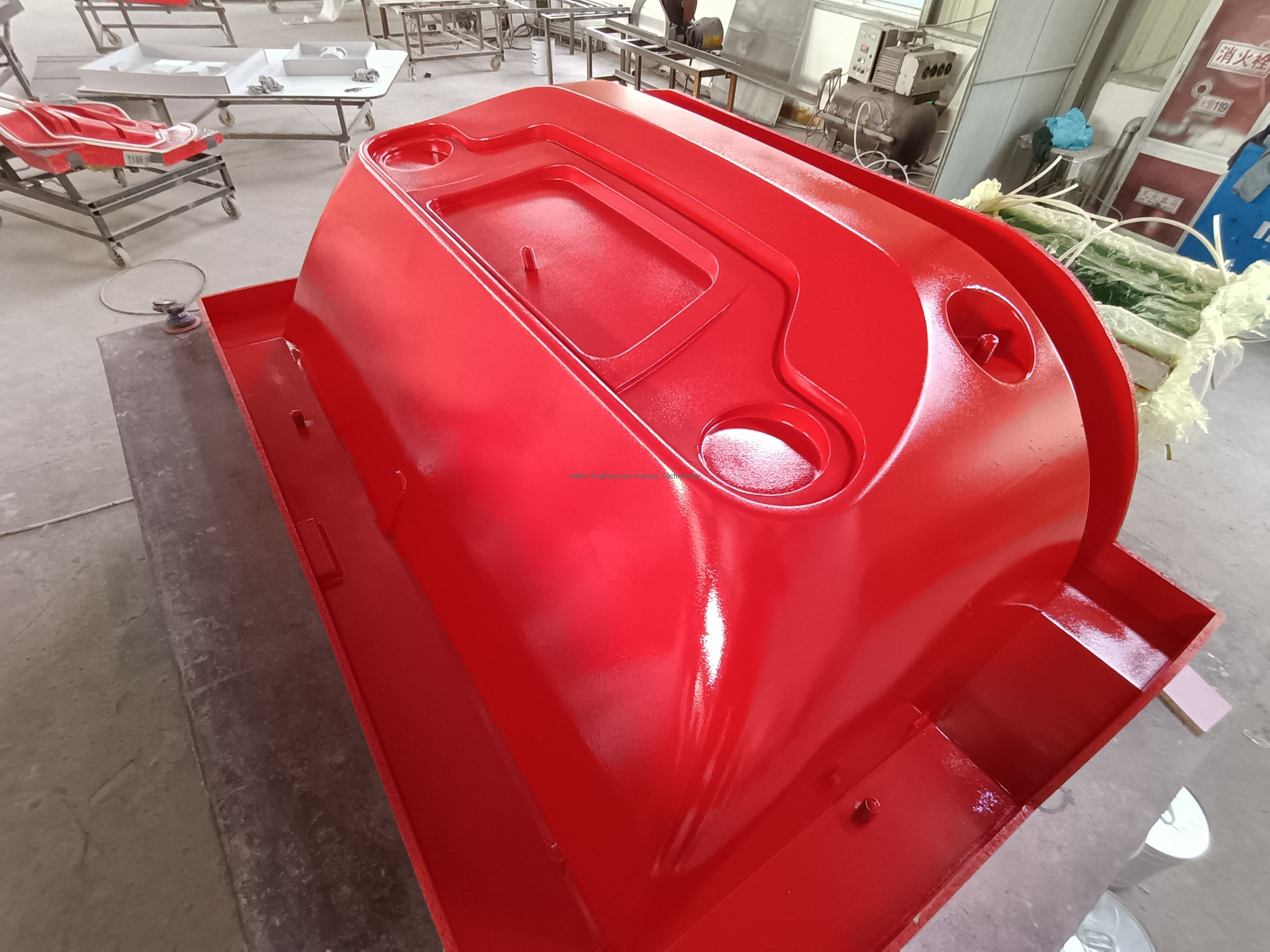
Fenders take the most direct punishment on any heavy-duty vehicle. They intercept rocks, ice chunks, and tire blow-out debris. Traditional aluminum fenders dent easily and transfer shock to the mounting brackets. A premium Fiberglass Truck Fender offers high resistance to this damage. The composite matrix absorbs impacts rather than crumpling. When evaluating these replacements, look closely at the underside. You must verify reinforced mounting points. Look for integrated inner liners. These liners prevent heavy road debris from causing star-cracking on the exterior gel-coat.
Aerodynamic transitions between the cab and the trailer are essential. They eliminate wind vortexes that create drag. A high-quality Fiberglass Truck Air Deflector manages these turbulent airframes perfectly. When sourcing deflectors, you must evaluate structural rigidity. Deflectors face constant, high-velocity wind loads. Flimsy construction leads to dangerous vibration at highway speeds. UV-resistant gel coats are absolutely mandatory here. Deflectors sit high on the cab, absorbing maximum solar radiation. Without marine-grade UV protection, the surface will chalk, fade, and eventually degrade.
Side skirts and hoods cover large surface areas. They present the best opportunity for drastic weight reduction. Fiberglass makes integrating access doors and maintenance panels seamless. However, these large spans introduce specific risks. You must assess thickness consistency across the entire panel. Evaluate the cross-bracing carefully. Reputable manufacturers use balsa wood or synthetic foam core reinforcements. These cores prevent large panels from warping under intense thermal expansion.
FRP components are fundamentally immune to rust and galvanic corrosion. This is a massive advantage for vehicles operating in winter climates. Road crews use aggressive chemical de-icers that destroy steel overnight. Fiberglass completely ignores these chemicals. It lowers long-term maintenance needs significantly compared to steel. You never have to sandblast and treat rust spots on a composite hood.
Impact absorption differs wildly between these materials. Aluminum lacks structural memory. When a rogue rock dents an aluminum skirt, the dent remains permanently. Repairing it requires heavy bodywork or complete panel replacement. High-quality fiberglass behaves differently. It can absorb minor to moderate impacts and flex back to its original shape. If the impact shatters the fiberglass, technicians can patch it locally. They grind the area, lay new glass mat, and blend the resin. This localized repair saves the entire panel.
Procuring custom fiberglass molds initially costs more than buying off-the-shelf stamped metal. However, long-term economic value improves rapidly. Fuel savings accumulate due to weight reduction and aerodynamic enhancements. Cosmetic repair cycles drop drastically. You spend less time in the body shop. You spend more time hauling freight.
You must acknowledge fiberglass limitations. The material possesses poor load-bearing capabilities on its own. It cannot support heavy structural weight without integrated framing. You must ensure internal steel or aluminum bracing exists for load-bearing areas. Furthermore, the manufacturing process requires specific temperature controls. If the factory cures the resin improperly, the panel will become brittle and fail prematurely.
Feature / Property | Fiberglass (FRP) | Aluminum | Steel |
|---|---|---|---|
Weight | Lightweight | Very Lightweight | Heavy |
Corrosion Resistance | Excellent (Immune) | Good (Prone to galvanic) | Poor (Prone to rust) |
Impact Memory | High (Flexes back) | None (Dents permanently) | Low (Dents) |
Aerodynamic Molding | Superior | Limited | Moderate |
Repairability | High (Local patching) | Difficult (Requires TIG welding) | Easy (Standard welding) |
Not all composites are created equal. The durability of Fiberglass Truck Parts relies entirely on the manufacturing methodology. Buyers must interrogate suppliers about their specific factory processes.
The most critical distinction is Hand-Laid versus Chopper Gun (Spray-Up) production. Hand-laid fiberglass involves technicians manually placing woven glass mats into the mold. They then saturate the mat with resin using rollers to remove air bubbles. This creates uniform resin-to-glass ratios. It yields superior tensile strength. Conversely, spray-up methods use a chopper gun. This machine sprays short, chopped glass fibers mixed with resin into the mold. It is cheaper and much faster. However, it creates brittle weak points. Spray-up parts suffer from inconsistent thickness and hidden air voids. They crack easily under highway vibrations.
The exterior gel-coat acts as the first line of defense. It seals the structural fibers away from moisture and sunlight. You must verify the gel-coat quality. Demand marine-grade or specialized transport-grade UV inhibitors. Standard gel-coats will degrade prematurely. They turn chalky white and begin micro-cracking within two years. High-grade finishes maintain their gloss and flexibility for decades.
Cores and reinforcements determine bolt-on stability. Fiberglass alone cannot hold a high-torque bolt. The material will crush. You must check for embedded mounting plates. Reputable builders laminate steel or aluminum plates directly inside the fiberglass during lay-up. This distributes the mounting pressure safely across the panel.
Always demand certifications and compliance documents. You should request material safety data sheets. If you transport hazardous materials, you might require fire-retardant (FR) properties. Ask the manufacturer for verified stress-test data. Reputable shops test their panels against vibration, wind shear, and thermal cycling.
The "direct bolt-on" claim is a notorious industry myth. Fleet managers must acknowledge installation realities. Even premium fiberglass parts often require slight modifications. Commercial truck chassis experience significant flex and twist over years of service. A brand-new hood may not align perfectly with a ten-year-old cab. Technicians frequently perform minor trimming. They may need to sand edges or drill custom holes to account for chassis variances. Budgeting time for pre-fitting is essential.
Mounting hardware considerations are critical for part longevity. You cannot bolt fiberglass directly to a steel frame using standard hardware. Engine vibrations will destroy the mounting points. You must use heavy-duty rubber isolators. These act as shock absorbers between the frame and the panel. Technicians must use oversized fender washers to distribute clamping force. Nylon lock nuts are mandatory. Over-tightening standard nuts causes immediate gel-coat cracking around the hole.
Evaluating "primer-ready" claims prevents body shop surprises. Some manufacturers ship parts requiring massive surface preparation. They might have pinholes, heavy seam lines, or mold release wax still attached. A true primer-ready panel requires minimal work. You must budget labor hours accurately. Technicians will need to sand seams and block the panels flat. They must apply high-build epoxy primers before shooting the final fleet color match.
Executing a successful fleet-wide transition requires a methodical rollout strategy. Never order fifty parts blindly. Follow a structured approach:
Order a Prototype: Purchase a single component or sample run first.
Pre-Fit the Part: Install it on a representative truck without paint. Check the gap tolerances and bolt alignments.
Assess Labor Hours: Track exactly how long your body shop takes to prep and paint the sample.
Stress Test: Put the prototype vehicle on a standard route for thirty days. Check for spider cracks near the mounting points.
Scale Up: Once the supplier fitment claims are verified, commit to fleet-wide replacement.
Upgrading to fiberglass exterior truck panels represents a calculated investment in durability and efficiency. It is never just an aesthetic choice. Shedding weight improves payload capabilities while sophisticated aerodynamics slash fuel consumption. By choosing composite materials, fleets actively avoid the constant, expensive cycle of rust repair and metal fatigue.
However, success depends entirely on vendor selection. Supplier transparency regarding manufacturing techniques remains the strongest indicator of part quality. You must insist on hand-laid fiberglass and high-grade UV-resistant gel coats. Avoid cheap chopper-gun parts that will fail under stress. Demand evidence of embedded mounting plates and core reinforcements.
Your next steps should be proactive. Advise your procurement team to request physical material samples. Review the supplier technical data sheets in detail. Consult with your trusted body shop managers. Get accurate installation labor estimates before finalizing any large procurement. Armed with this evaluation framework, you can integrate fiberglass parts that deliver lasting operational value.
A: Yes. Fiberglass is highly repairable. Technicians can fix structural damage using localized patching with fiberglass resin and matting. They blend the repair seamlessly into the panel. Aluminum, conversely, requires difficult TIG welding. Thin aluminum panels warp under high heat, making them notoriously hard to repair properly.
A: Fiberglass can save between 30% to 50% in weight compared to traditional steel counterparts. The exact percentage depends on the panel's size and the specific core materials used (like balsa or synthetic foam). This significant reduction improves fuel economy and allows for higher payloads.
A: They will not crack if installed correctly. Proper mounting mitigates vibration-induced stress fractures. You must use thick rubber isolators, oversized washers, and lock nuts. Additionally, high-quality fenders feature embedded metal plates to reinforce the bolt holes, preventing the fiberglass from crushing or spider-cracking.
A: Inspect the unpainted backside of the panel. A hand-laid part features a distinct, structured woven texture from the fiberglass mats. A sprayed part (made with a chopper gun) looks chaotic. It will have a random, choppy appearance with short, multi-directional fibers clumped together.


 info@xhyfrp.com.cn
 86-15801078718
 Plant No.4, Area E, Nanju Industrial Park,Hangbu Town, Shucheng County, Anhui, China


